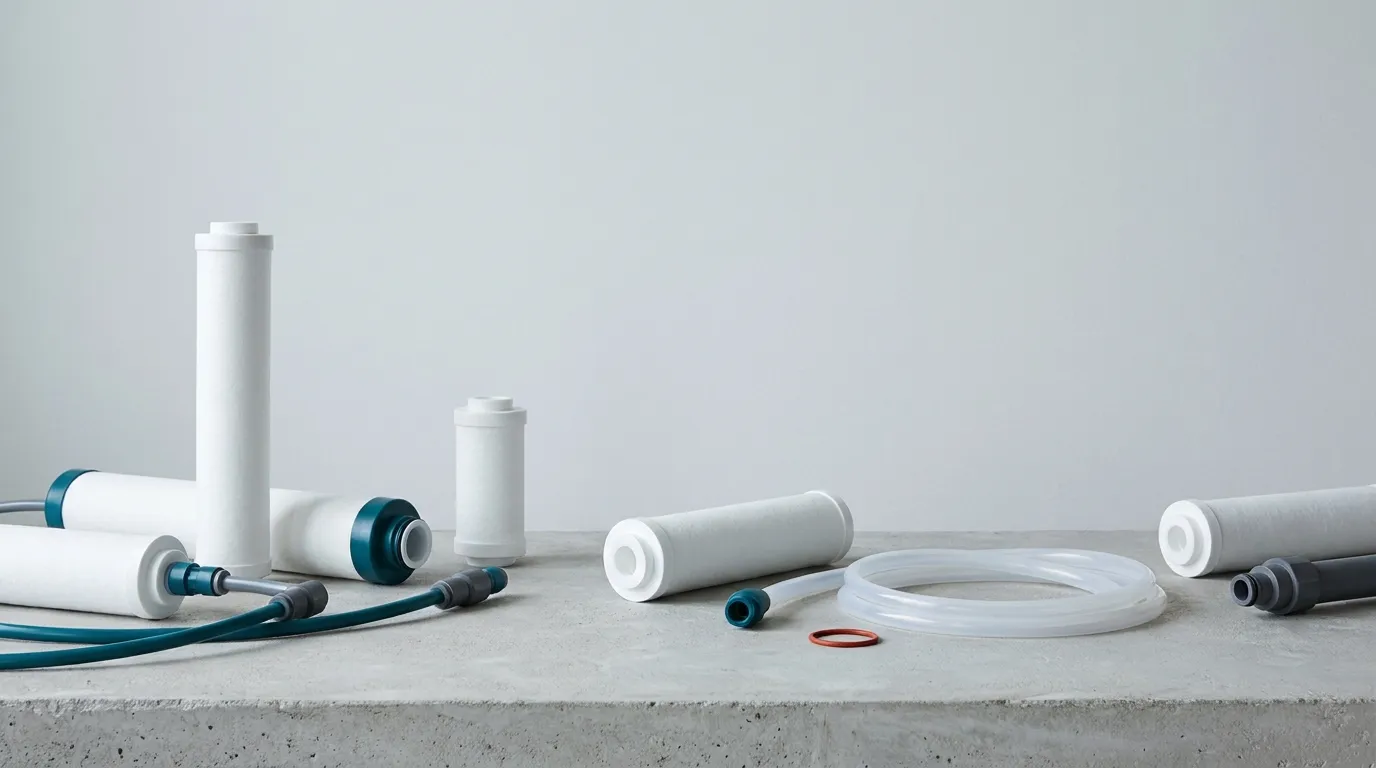
Can plasma exchange remove microplastics from your blood?
A 2026 before-and-after series of 174 procedures in 114 patients reported lower circulating microplastics after plasma exchange, though tubing leached plastic back into the blood. No study has measured health outcomes, and removal of plastics stored in tissue has not been shown.
Nov 17, 2026Updated Nov 18, 20267 min read

Plasma exchange can lower the microplastics measured in your blood in the short term, but no study has yet measured whether that improves health. A 2026 series of 174 plasma exchange procedures reported lower circulating levels, yet its authors also write that there is currently no established method for removing microplastics from the human body.
What did the 2026 study of 174 plasma exchanges find?
Researchers measured circulating microplastics in 114 patients before and after 174 plasma exchange procedures and reported that the procedure reduced them. However, plastic from the machine's tubing leaked back into the blood, which hid the reduction in people who started with low levels.
Therapeutic plasma exchange (TPE) removes plasma, the liquid part of the blood, and replaces it with donor plasma or albumin. Each procedure in this study exchanged one plasma volume on the Spectra Optia Apheresis System. For background, see how therapeutic plasma exchange works.
The authors call their result "the first demonstration that it is possible to reduce circulating MP in human patients", where MP means microplastics. They also report that "the reduction is obscured at low starting levels of MP because of leaching of MP back into the circulation from the plastic apheresis tubing set". The circuit that removes plastic can also add some.
The study has three limits:
- The abstract reports no percentage reduction.
- It describes only before-and-after measurements and mentions no control group.
- It reports no health outcomes.
Most authors list an affiliation with Circulate Health, Seattle. Others list Atria Health Institute, Lifespan Health in Dallas, and the Center for Precision Medicine & Healthy Longevity in New York. The PubMed record carries no conflict-of-interest statement, so the full article is the place to check disclosures. In a separate trial published in Aging Cell, three researchers disclosed that they are members of Circulate Inc., one as co-founder and chief scientific officer.
Does double filtration plasmapheresis remove microplastics or PFAS better?
There is no head-to-head comparison to go on. One small paper reported decreases in both PFAS and micro- and nanoplastic levels after double filtration plasmapheresis, with responses that varied across patients and substances. The authors say larger, well-designed clinical trials are needed.
Double filtration plasmapheresis (DFPP) separates plasma, passes it through a second filter, and returns it to the body instead of replacing it. INUSpheresis is a separate, branded plasma filtration method. These results come from DFPP and are not evidence for INUSpheresis. See INUSpheresis vs plasma exchange: what's different.
The detailed figures come from the press release for the paper, not from the peer-reviewed abstract:
- PFAS: plasma from 14 patients showed reductions of up to 25 percent in four compounds: perfluorooctanoic acid, perfluorooctane sulfonic acid, perfluorononanoic acid and perfluorohexane sulfonic acid.
- Plastics: in blood from four patients, polyethylene fell in all four and polyvinyl chloride in three of four. Polypropylene fell in one patient and rose in two.
The release lists the authors' own limits. Sample sizes were small, patient indications and apheresis systems were mixed, the plastic assays are exploratory, the field lacks validated standard methods, and contamination during sampling is a real hazard.
The paper discloses ties. One author is on the advisory board of Ayus Medical Group, two work at Ayus Medical Group, and two are involved in Proxima Health, a startup working on apheresis technology.
Does donating plasma lower PFAS or microplastics?
For PFAS, one randomized trial found that regular plasma donation lowered blood PFOS in firefighters over 12 months. PFOS (perfluorooctane sulfonate) is one of the "forever chemicals." The trial did not test plasma exchange and did not measure microplastics.
The 52-week, open-label, randomized trial enrolled 285 Fire Rescue Victoria staff or contractors with PFOS levels of 5 ng/mL or more. Participants donated plasma every 6 weeks, donated blood every 12 weeks, or were observed only. At 12 months, mean PFOS was reduced by 2.9 ng/mL with plasma donation and 1.1 ng/mL with blood donation, and was unchanged with observation.
Of the participants, 279 of 285 (97.9%) were men, with a mean age of 53.0, so the results may apply less clearly to women. The authors concluded that further research is needed to evaluate the clinical implications.
A single-author article in Cureus notes that PFAS "bind strongly to serum albumin", that DFPP "achieved significant clearance of serum perfluorooctane sulfonic acid (PFOS)", and that TPE "may be a beneficial intervention". That "may" is a hypothesis, not a trial result.
| Method | What happens to your plasma | What has been measured |
|---|---|---|
| Plasma exchange (TPE) | Removed and replaced with donor plasma or albumin | Lower circulating microplastics in one before-and-after series |
| Double filtration (DFPP) | Filtered and returned | Small, mixed drops in PFAS and some plastics |
| Plasma donation | A portion collected; the body replenishes it | Lower PFOS in one randomized trial; microplastics not measured |
How strong is the evidence that apheresis "detox" improves health?
Apheresis is established for specific diseases, emerging as a way to change plastic and PFAS measurements, and unproven as a way to improve health by removing them. None of the studies above measured whether lowering blood microplastics or PFAS prevents disease or extends life.
- Established: the American Society for Apheresis grades therapeutic apheresis, including TPE, disease by disease. Its tenth edition comprises 93 fact sheets and 183 graded and categorized indications, each summarizing evidence for a specific condition.
- Emerging: one before-and-after TPE series showed lower circulating microplastics, small DFPP datasets showed mixed drops in PFAS and some plastics, and one randomized trial showed donation lowered PFOS.
- Unproven: that any form of apheresis improves health, lowers total body burden, removes microplastics through donation, or works as a full-body reset.
The DFPP press release states there is "no randomized controlled trial and no long-term outcome data". The 2026 TPE authors describe microplastics as carrying "serious potential risks to human health". Those are potential risks, not proven harms.
Two plasma exchange trials, neither measuring plastics, show the gap between a lab change and a felt benefit. A randomized trial of 42 adults reported 15 epigenetic clocks showing rejuvenation compared to placebo; epigenetic clocks are lab markers, and its authors included people affiliated with Global Apheresis and Circulate. When a trial in 50 people with long COVID tested whether participants did better, it found no differences between groups in any of the efficacy parameters.
Bornstein, an author quoted in the DFPP release, set the priority: "None of this displaces the first priority, which remains preventing exposure."
What are the risks and costs, and who is this for?
Plasma exchange has mostly mild side effects, but it takes hours, may need a central line, and costs money for a purpose with no proven health benefit.
The American College of Rheumatology describes sessions lasting a few hours. Patients may feel cold or nauseated or have mild tingling of the lips, hands or feet, and fatigue is common. A central line carries a small risk of infection and bleeding, and plasma exchange can remove some medications. The DFPP press release describes therapeutic apheresis as usually causing mild, transient adverse events such as low blood pressure, dizziness, nausea and citrate-related symptoms, and notes that donor plasma or albumin "may itself carry environmental toxins". The full picture is in plasma exchange side effects.
Prices vary by clinic and method. Northvane keeps dated, published apheresis prices, with context in what plasma exchange costs in the US.
This is a poor match for anyone expecting proven health gains, tissue clearance or a one-time reset. Anyone whose medicines could be affected by plasma removal should raise that first. Whether it is reasonable for you is a decision for a physician who knows your full history.
What should you ask a clinic or physician?
Ask questions that test the weak points the studies revealed:
- Which device and tubing set do you use, and how do you account for plastic leaching from the circuit?
- Which laboratory tests microplastics or PFAS before and after, and how do you prevent contamination during sampling?
- What replacement fluid do you use, and has it been tested for environmental contaminants?
- What outcome data do you have beyond changes in blood levels?
- What financial or professional ties do you have to the studies you cite?
- How will you handle my current medications?
- Which graded disease indication, if any, supports doing this for me?
Common questions
Is plasma exchange FDA-approved for microplastic or PFAS detox?
No. The FDA clears apheresis devices, not every use a clinic advertises. The Spectra Optia, used in the 2026 microplastics study, was cleared on August 2, 2007 under the classification "Separator, Automated, Blood Cell And Plasma, Therapeutic" (K071079). That clearance covers the device. It is not an approval to remove microplastics or PFAS.
Does plasma exchange remove plastics stored in the brain or arteries?
That has not been shown. The studies measured blood and plasma, not tissue. A researcher on the double-filtration paper said, "We have not demonstrated that apheresis removes plastic already bound in tissue." The release adds that an early drop in blood may be partly offset as plastic moves out of tissue reservoirs, and whether repeated sessions change total body burden is unknown.
Is plasma exchange the same as young-plasma infusion?
No. Plasma exchange removes your plasma and replaces it, while young-donor plasma infusion adds plasma from young donors. In 2019 the FDA warned there is "no proven clinical benefit of the infusion of plasma from young donors" for aging or memory loss. Neither has been shown to improve health by lowering microplastics.
Sources11 cited
- [1]Can Plasma Exchange Be Used to Lower the Circulating Burden of Microplastics in Human Patients? · doi.org
- [2]Cleaning cholesterol from blood also lowered forever chemicals and plastics, and nobody knows why | EurekAlert! · eurekalert.org
- [3]are members of Circulate Inc., one as co-founder and chief scientific officer · doi.org
- [4]decreases in both PFAS and micro- and nanoplastic levels after double filtration plasmapheresis · doi.org
- [5]Effect of Plasma and Blood Donations on PFAS Levels in Firefighters in Australia · jamanetwork.com
- [6]Role of Therapeutic Plasma Exchange in Accelerating the Clearance of Perfluoroalkyl and Polyfluoroalkyl Substances. · doi.org
- [7]tenth edition comprises 93 fact sheets and 183 graded and categorized indications · doi.org
- [8]Plasma exchange therapy for the post COVID-19 condition: a phase II, double-blind, placebo-controlled, randomized trial - Nature Communications · doi.org
- [9]Plasma Exchange (Plasmapheresis) | American College of Rheumatology · rheumatology.org
- [10]510(k) Premarket Notification · accessdata.fda.gov
- [11]Important Information about Young Donor Plasma Infusions for Profit | FDA · fda.gov
For information, not medical advice. Suggest a correction · Editorial policy